The Invisible Workflows: How AI is Becoming Your Dynamic Co-Pilot
From rigid automations to dynamic multi-agent orchestration.
Just yesterday, I was having a conversation about how automation is evolving. We’ve all seen AI in workflows — the static “if-this-then-that” pipelines, the scheduled bots, the integrations that connect tools. But what if I told you we’re on the verge of something far more radical?
Today, Perplexity launches “The Computer”. And if you’re anything like me, your jaw probably dropped when you saw what it does. The world is moving fast — maybe scarier fast than most of us are ready for.
Here’s why this matters.
From Static Workflows to Dynamic Intelligence
Traditional automation works like this:
- Predefined rules: “If email received, save attachment to Dropbox.”
- Linear execution: The system follows the steps exactly.
- Human oversight required: If something breaks, you troubleshoot.
This works for simple tasks but is brittle. Real work rarely fits into neat boxes. AI changed the game by adding intelligence: understanding commands, parsing data, predicting actions, even correcting minor errors.
But even smart AI helpers were still following your script. The workflow was fixed. AI was a helper, not a conductor.
Static vs Dynamic Workflows
Here’s the visual difference:
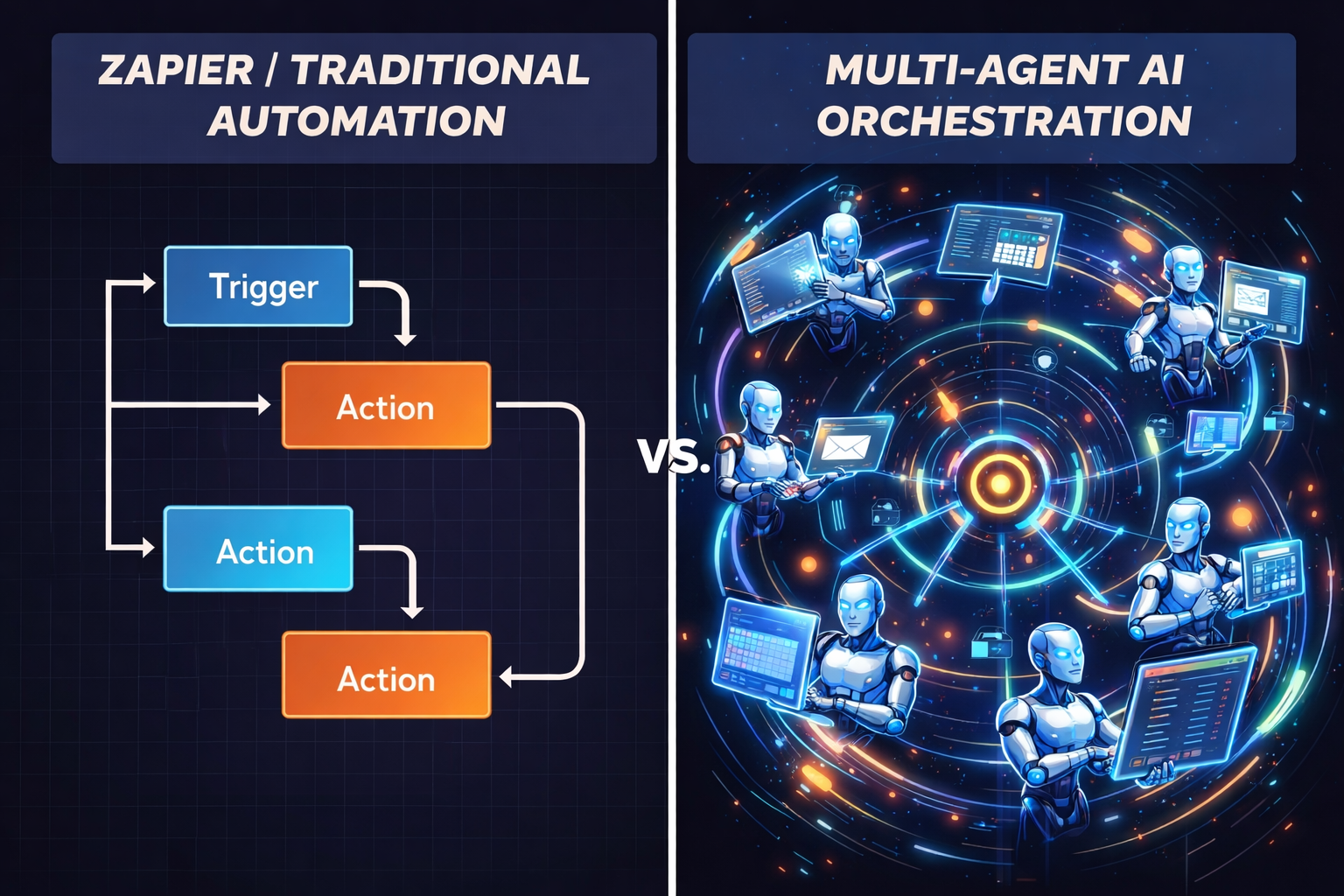
Caption: “From rigid automation… to dynamic AI orchestration.”
On the left: rigid flowcharts, linear steps, and fragile integrations.
On the right: dynamic multi-agent AI networks that coordinate tasks automatically toward your goals.
This is where automation becomes invisible — you only see results, not the spaghetti of processes behind them.
Invisible Workflows
Imagine telling a system:
“Analyze this customer data, segment them into priority groups, generate tailored outreach emails, and schedule follow-ups over the next month.”
You don’t care how it’s done — it just happens.
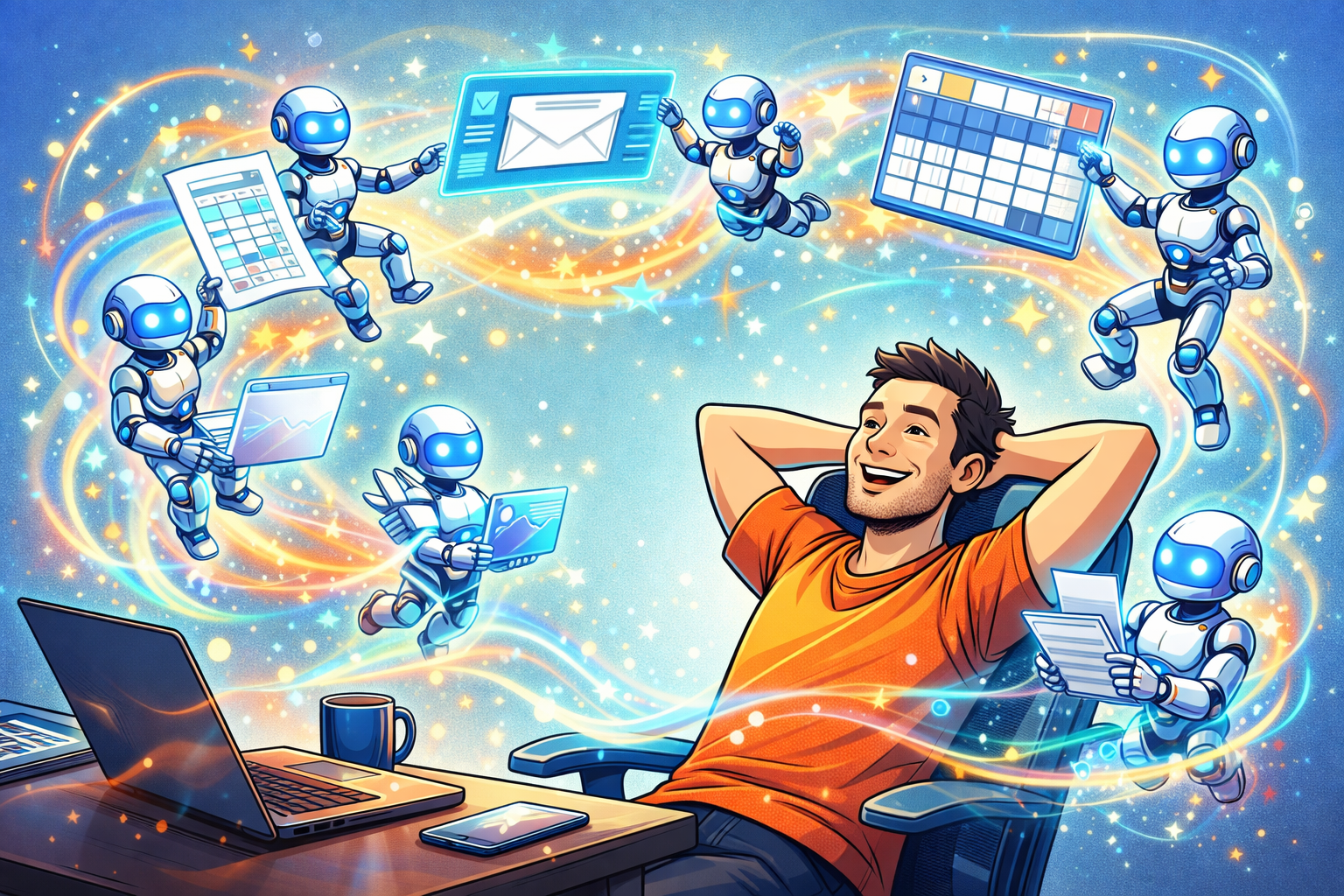
Caption: “You only define the goal; AI handles the rest.”
This is automation as a co-pilot, not a script follower.
Multi-Agent Orchestration
The magic is in multi-agent collaboration. Each agent has expertise, and they work in harmony to achieve the objective. Think of it as an orchestra:
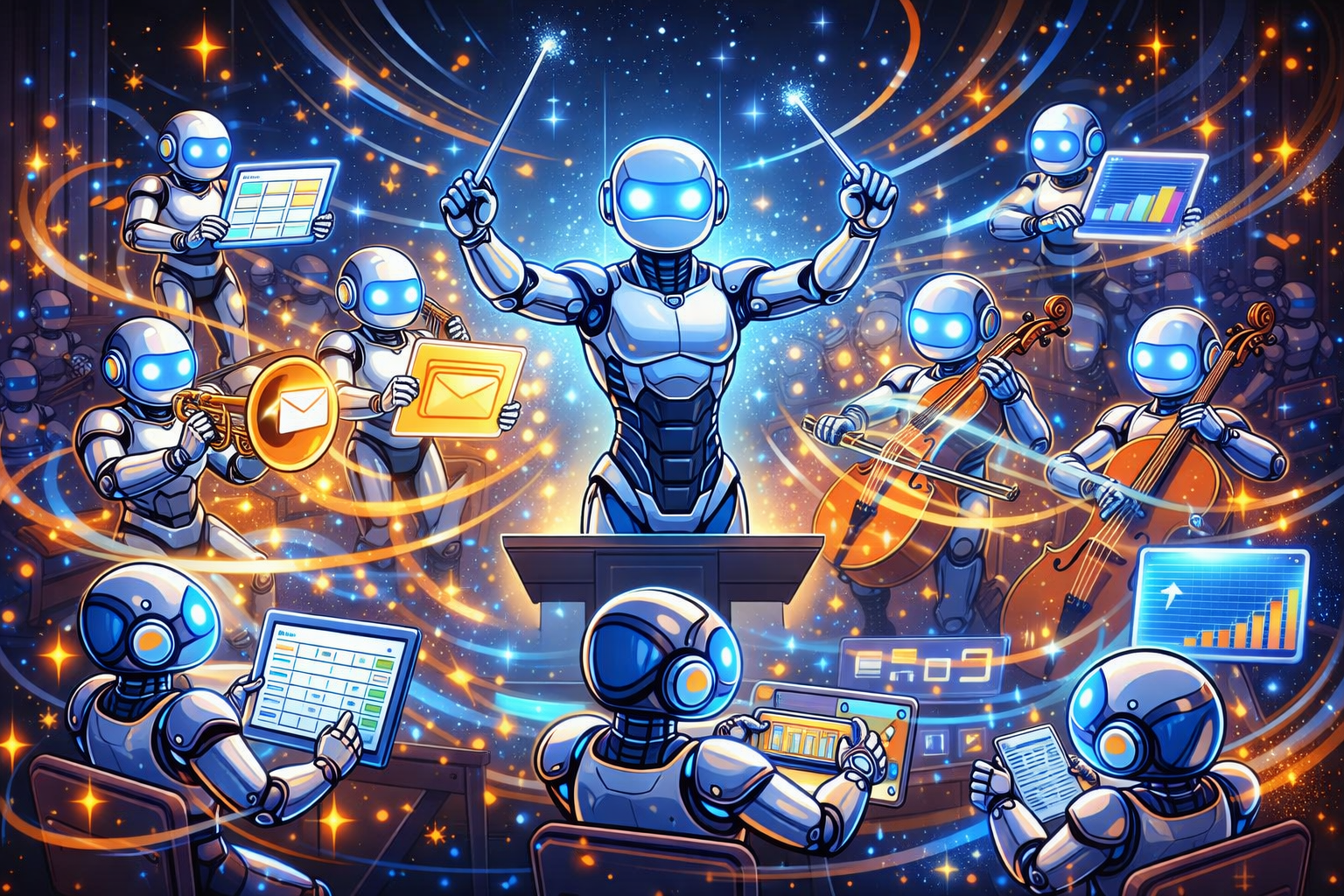
Caption: “An orchestra of AI agents collaborating toward your objectives.”
- Data processing agent
- Email drafting agent
- Analytics agent
- Scheduler agent
All coordinated dynamically to deliver a seamless outcome.
Real-Time Adaptation
Unlike traditional automation, dynamic AI adapts on the fly:
- Detects errors and self-corrects
- Adjusts priorities as new data comes in
- Scales operations without human input
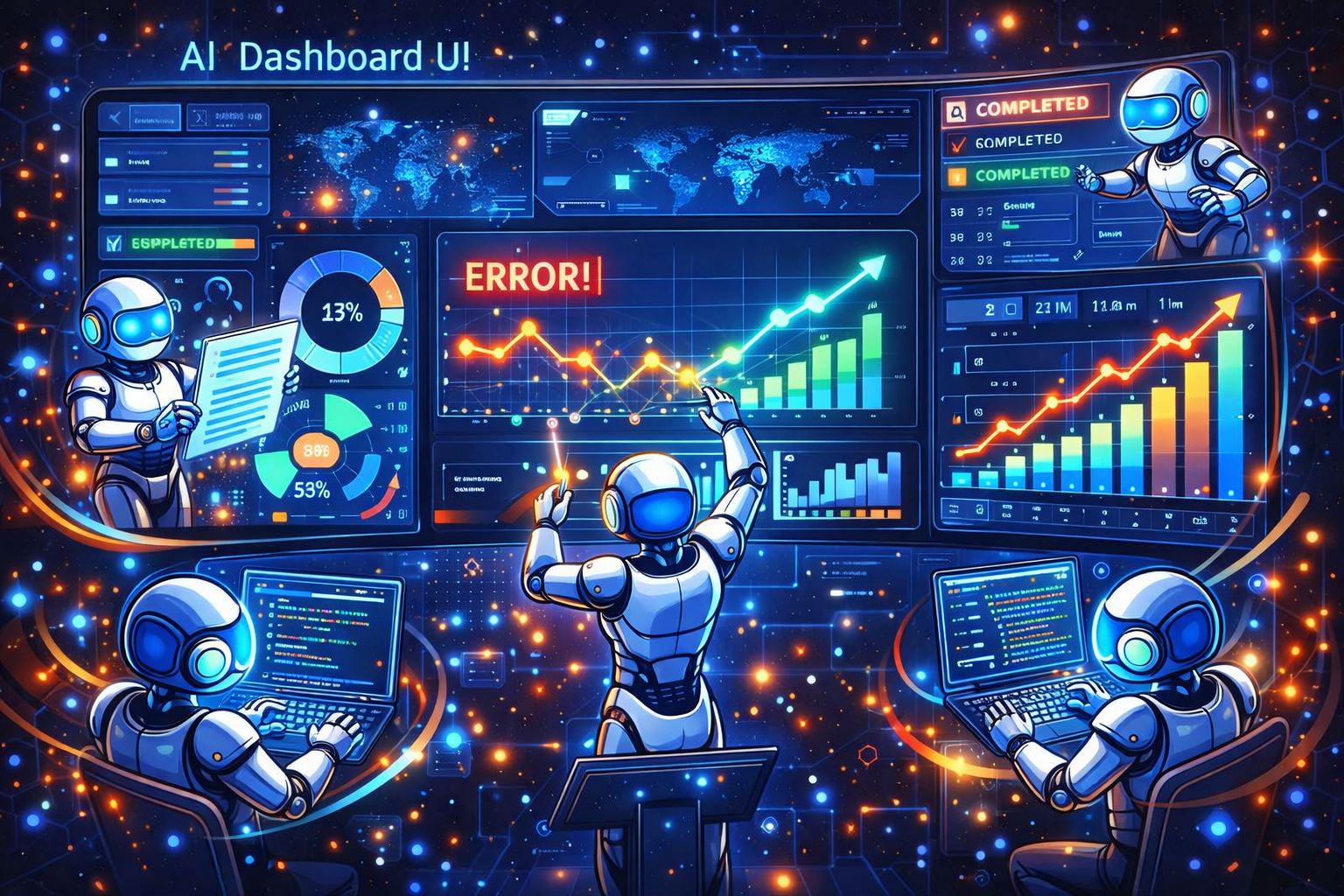
Caption: “Dynamic workflows adapt in real-time, correcting themselves on the fly.”
This is where AI becomes a reliable collaborator, not just a tool.
Comparison: Traditional vs Multi-Agent AI
| Feature | Traditional Automation | Multi-Agent AI |
|---|---|---|
| Workflow | Static, linear | Dynamic, objective-driven |
| Adaptation | Manual | Real-time, self-correcting |
| Scale | Limited | Parallel agent orchestration |
| Human Involvement | High | Minimal (strategy + oversight) |
| Intelligence | Task-level | Orchestration-level |
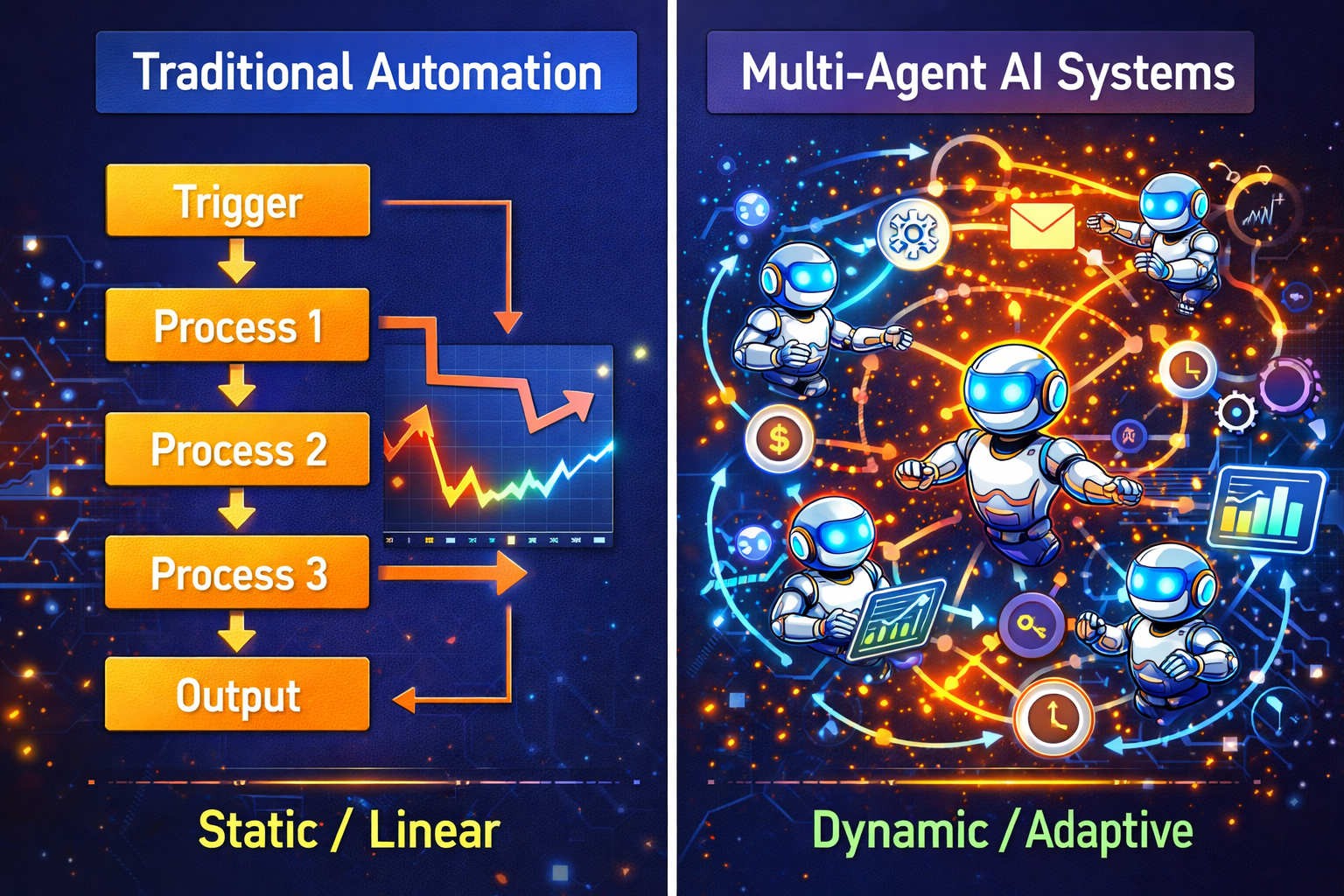
Caption: “How multi-agent AI outperforms static automation.”
Use Case Scenarios
Let’s make this concrete:
- Sales & Marketing Automation – AI generates leads, drafts personalized emails, and schedules follow-ups.
- Data Analysis & Reporting – AI aggregates data, identifies trends, creates charts, and summarizes insights.
- Product Management & Customer Support – AI triages tickets, prioritizes requests, and suggests roadmap updates.
- Personal Productivity – AI organizes your calendar, manages emails, and drafts presentations.
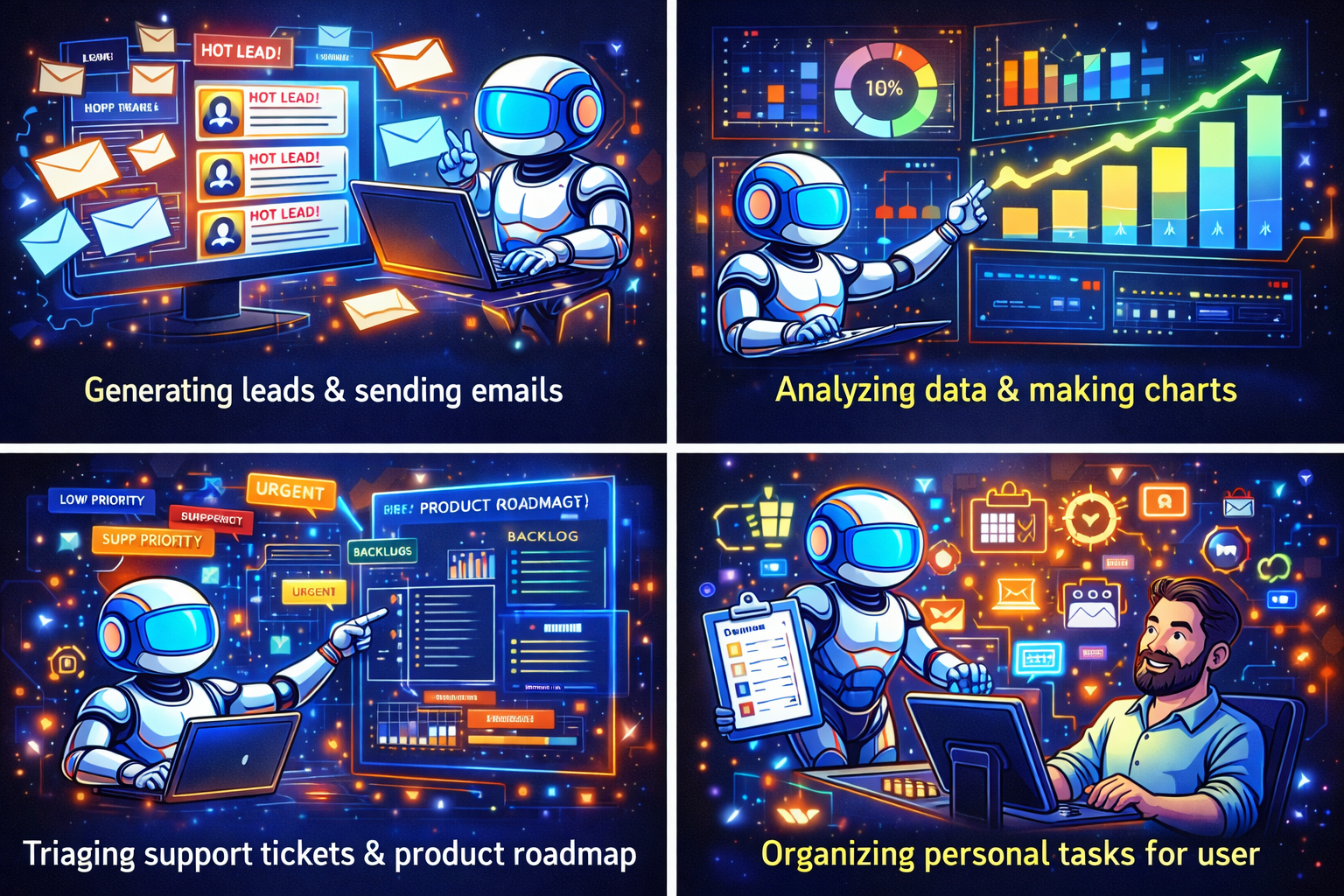
Caption: “From sales to personal productivity, AI handles it all.”
The Importance of Reliability and Guardrails
With great autonomy comes great responsibility. Multi-agent AI systems can be powerful, but without proper reliability and guardrails, they can cause chaos.
Key requirements:
- Error handling and rollback: Agents must detect failures and recover gracefully.
- Transparency: Users need visibility into what actions were taken and why.
- Ethics and bias controls: Autonomous decision-making must be fair, safe, and accountable.
- Integration guardrails: Legacy systems and sensitive data require boundaries to prevent unintended outcomes.
- Monitoring & human oversight: Even with dynamic AI, humans need to intervene when stakes are high.
Reliability isn’t optional — it’s what allows these systems to scale safely while keeping users confident in AI decisions.
Final Thoughts / Call to Action
The AI revolution isn’t just about smarter models or more integrations. It’s about rethinking work itself:
- Workflows become invisible.
- Execution becomes dynamic.
- Objectives become the interface.
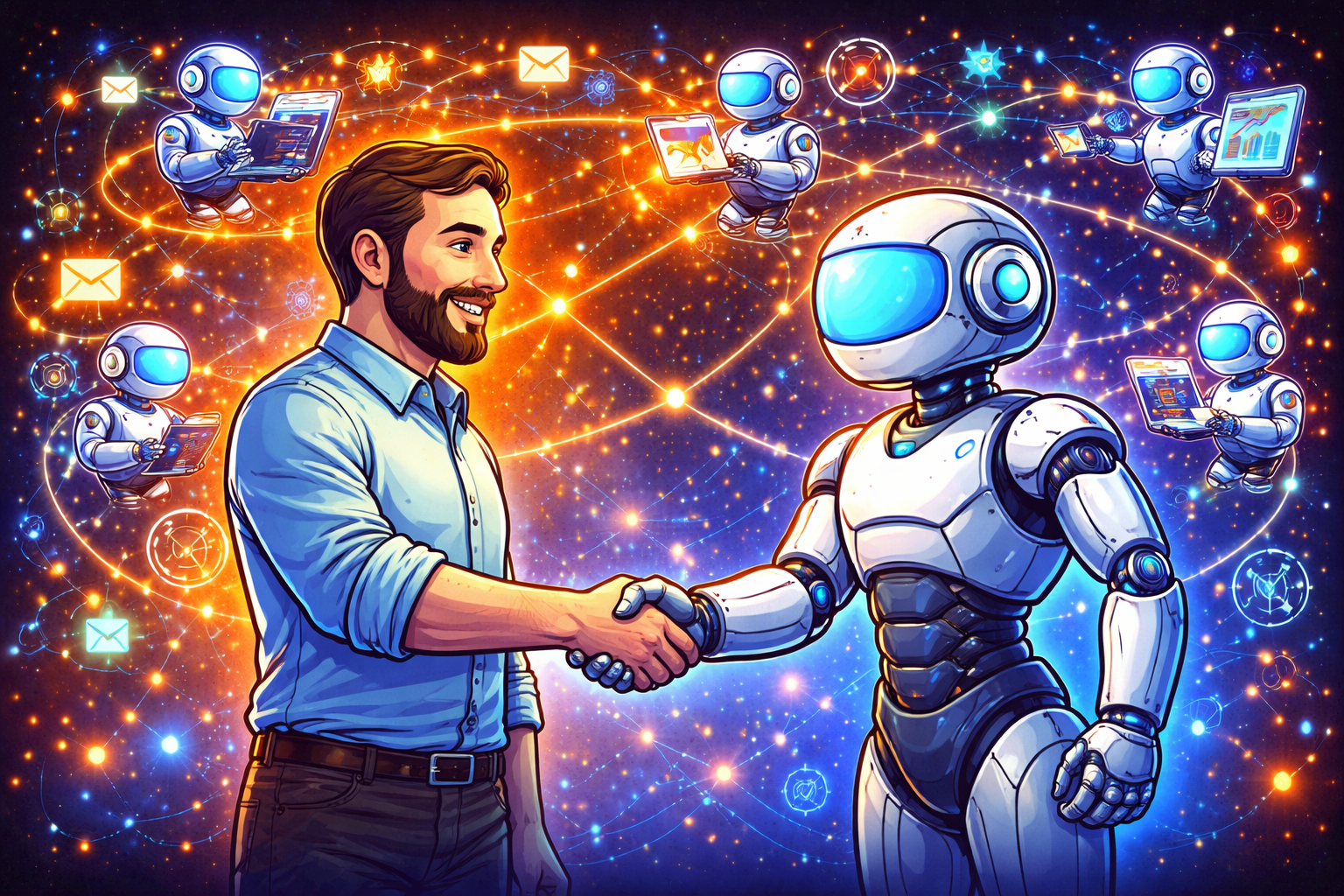
Caption: “The future of work: humans and AI, collaborating seamlessly.”
Perplexity’s “The Computer” is a glimpse into this future — a world where AI isn’t just a tool, it’s a co-pilot, an orchestrator, and a collaborator.
Buckle up. The pace of change is accelerating.
AI Workflow Audit
Want to apply this to your workflow?
I help B2B teams design human-approved AI workflow systems for CRM hygiene, lead research, content ops, and internal automation.
Book Free Review