AI Agents Are Overhyped — The Real Future Is Workflow-First Systems
Why workflow-first systems will outlast agent-first hype.
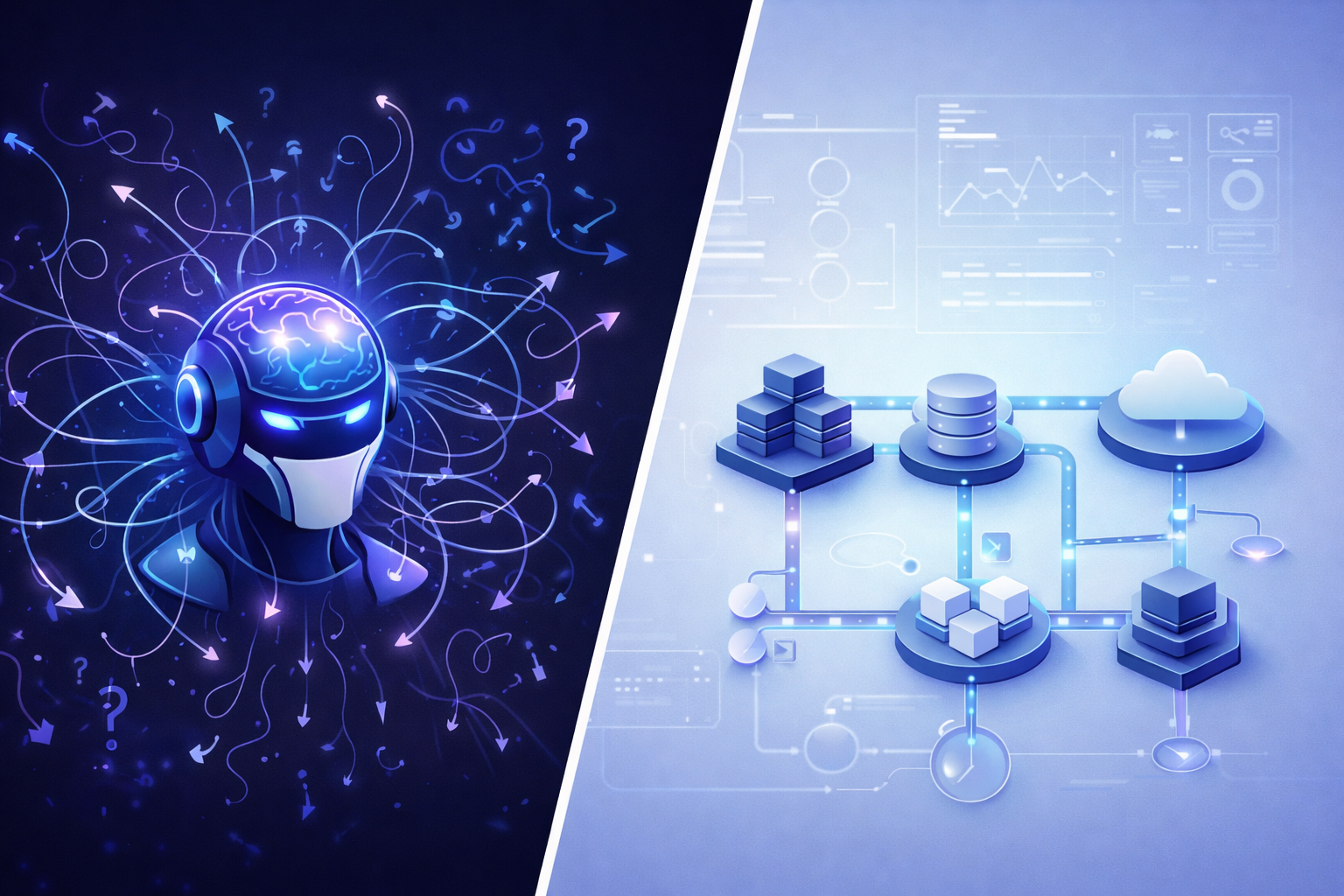
A few weeks ago, I was watching a founder demo what he called an “AI sales agent.” The pitch was simple and compelling: you give the system a goal—“generate qualified leads and book meetings”—and it handles everything end-to-end. It finds prospects, researches them, drafts emails, sends outreach, and even follows up.
On the surface, it was impressive. The agent moved quickly, made decisions autonomously, and produced outputs that looked, at least initially, quite convincing.
But as the demo went on, a few uncomfortable questions started to emerge.
What happens if the agent pulls the wrong data?
What happens if it emails the wrong person—or worse, the right person with the wrong message?
What happens when a prospect replies with something nuanced or unexpected?
And perhaps most importantly: how do you know why the agent did what it did?
The answers were vague. There were mentions of “guardrails,” “prompt tuning,” and “iterative improvements.” But there wasn’t a clear explanation of how the system would behave under real-world constraints.
That gap—between what the agent appears to do and what a business actually needs—is where most of today’s AI hype starts to break down.
The Seduction of Agent-First Thinking
It’s easy to understand why AI agents have captured so much attention. They represent a powerful idea: instead of explicitly designing systems, you simply define an outcome, and the system figures out the rest.
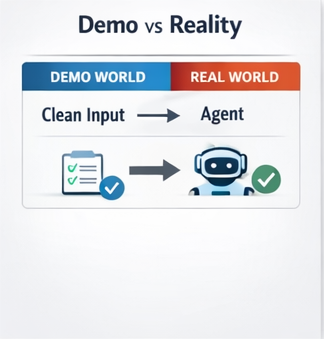
This works beautifully in demos. You give an agent a clean task, and it produces results that feel almost magical.
But demos are controlled environments. Businesses are not.
🧩 Key Takeaway
Businesses Don’t Run on Outcomes—They Run on Processes
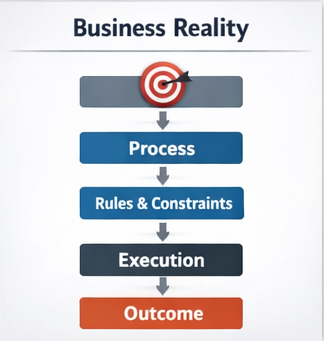
One of the biggest misconceptions today is that businesses operate around goals. In reality, they operate around processes.
Take outbound sales. What sounds like a simple task—finding leads and sending emails—is actually a tightly structured system involving rules, approvals, constraints, and integrations.
When you hand that entire system to an autonomous agent, you’re not automating it—you’re asking the system to improvise within constraints it doesn’t fully understand.
🧩 Key Takeaway
The Hidden Cost of Autonomy
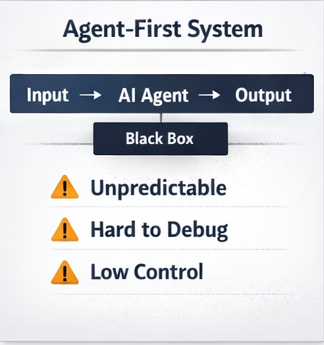
Agent-first systems optimize for autonomy, but autonomy introduces trade-offs.
They are non-deterministic, harder to debug, and difficult to control precisely. When something goes wrong, the root cause is often buried inside layers of reasoning that are not fully observable.
This makes them fragile in production environments where reliability is non-negotiable.
🧩 Key Takeaway
Reframing the Problem: From Agents to Workflows
A better starting point is not “how do we build an agent,” but “what workflow are we trying to execute?”
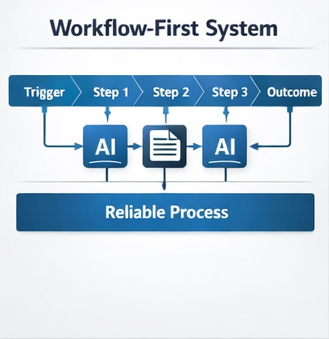
When you think in workflows, the system becomes a sequence of defined steps, each with clear inputs, outputs, and responsibilities. AI is introduced only where it adds value.
This creates a system that is both intelligent and reliable.
🧩 Key Takeaway
The Proper Role of AI Agents
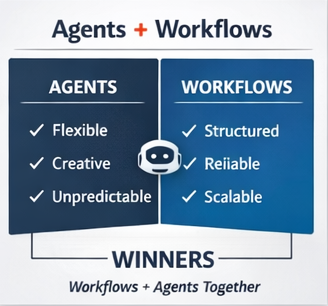
AI agents are not the system—they are components within the system.
They excel at tasks like generating content, interpreting data, or making probabilistic decisions. But they need structure around them to operate effectively.
When placed inside workflows, agents become powerful enablers rather than unpredictable operators.
🧩 Key Takeaway
WRONG MODEL
Agent = System

RIGHT MODEL
Workflow = System
Agent = Component
From Magic to Engineering
Agent-first systems feel like magic because they hide complexity. Workflow-first systems feel like engineering because they expose and manage it.
And while magic is great for demos, engineering is what builds reliable businesses.
The ability to trace failures, understand behavior, and control execution is what separates experiments from production systems.
The Architecture That Actually Works
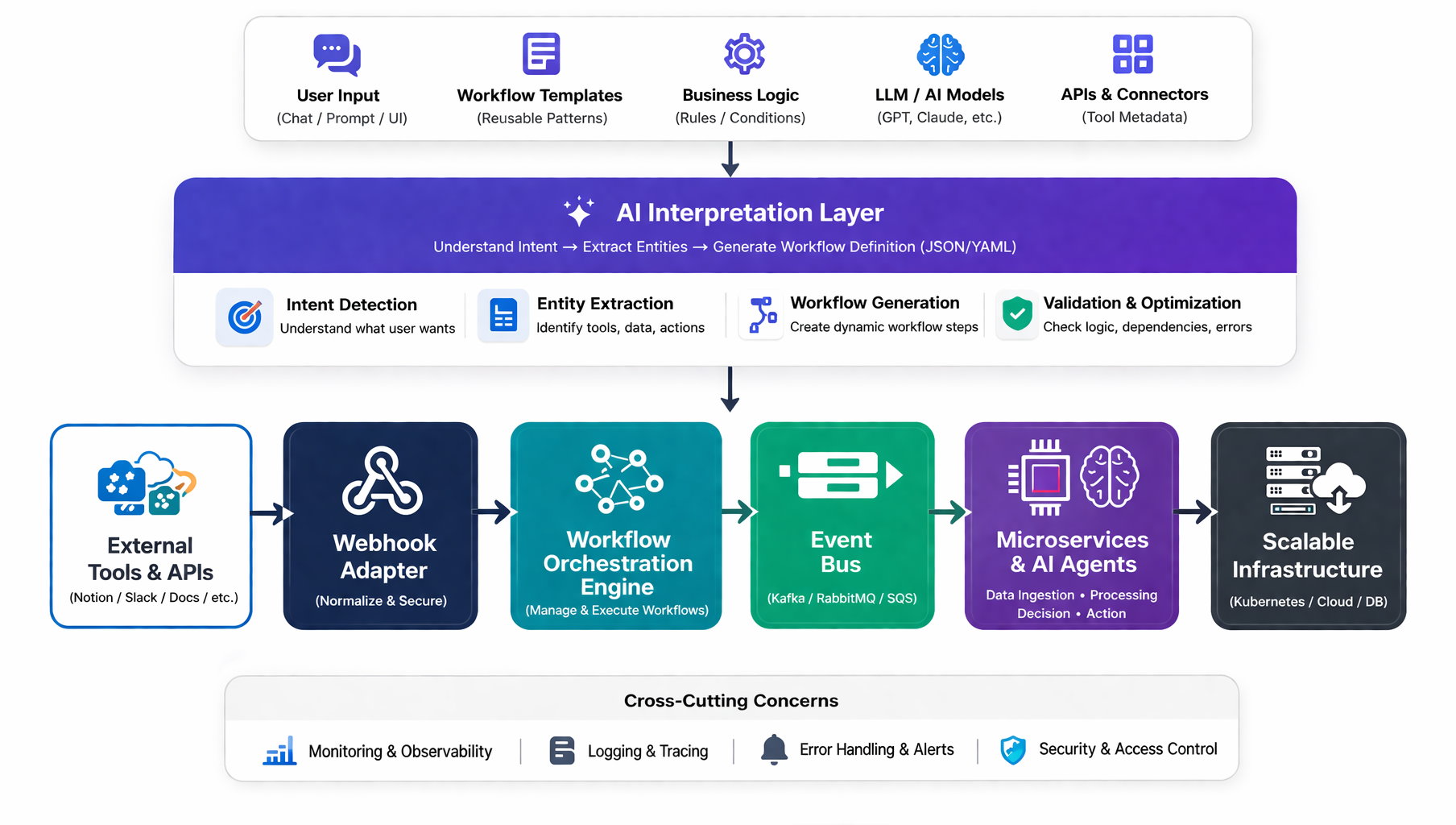
This shift in thinking leads to a different kind of architecture—one that is modular, observable, and scalable.
Instead of a single monolithic agent, you build a system composed of interconnected layers: ingestion, orchestration, communication, execution, and intelligence.
On top of this sits an emerging capability—an AI layer that translates human intent into structured workflows.
🧩 Key Takeaway
A Tale of Two Systems
Consider customer support.
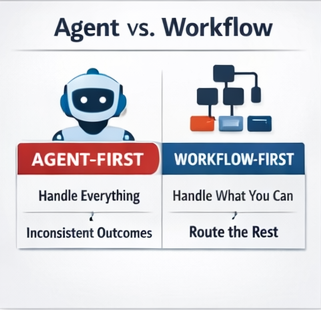
An agent-first system tries to handle everything autonomously. It reads tickets, interprets intent, and responds directly. This works for simple cases but struggles with ambiguity and edge cases.
A workflow-first system introduces structure. It classifies tickets, applies confidence thresholds, routes complex issues to humans, and logs every interaction.
Same AI. Completely different reliability.
🧩 Key Takeaway
Where This Is All Heading
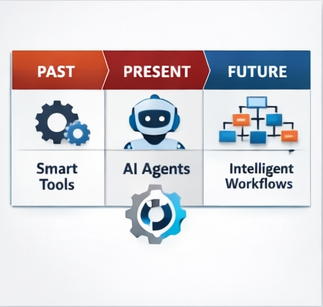
As AI becomes more accessible, the advantage will not come from having better models, but from designing better systems.
The shift is already happening—from standalone intelligence to orchestrated intelligence, from black-box automation to observable workflows.
🧩 Key Takeaway
Final Thought
AI agents are not useless—they are simply misunderstood.
They are being treated as replacements for systems when they should be integrated into them. When used correctly, they enhance workflows. When used incorrectly, they introduce risk.
The future belongs to those who understand the difference.
Because while agents can improvise, it is workflows that scale.
🧩 Final Takeaway
If You Take One Thing Away
Don’t start with:
“What can an agent do?”
Start with:
“What workflow do I need—and where can AI help inside it?”
That single shift turns AI from a demo into a system—and from a risk into an advantage.
AI Workflow Audit
Want to apply this to your workflow?
I help B2B teams design human-approved AI workflow systems for CRM hygiene, lead research, content ops, and internal automation.
Book Free Review